Asbestos Found in Auburn Properties — What Owners Need to Act On
Asbestos in Auburn's Older Residential Properties
Auburn's residential neighborhoods developed primarily in the 1950s, 1960s, and 1970s, producing a housing stock where asbestos-containing materials are a consistent presence in homes that have not been substantially renovated since construction. Single-family homes built during this period throughout Auburn contain the standard pre-1980 ACM profile: pipe insulation on basement heating systems, vinyl asbestos floor tile in kitchens, basements, and bathrooms, popcorn ceiling texture in living spaces and bedrooms, and in properties from the earlier decades of this range, transite asbestos-cement siding on wood-frame exteriors. Renovation projects in Auburn homes consistently surface these materials when original construction elements are disturbed. Kitchen remodeling that requires removing old flooring frequently uncovers vinyl asbestos tile under layers of more recent installation. Basement renovation projects encounter pipe insulation in mechanical spaces. Ceiling work in pre-1979 homes confronts the identification challenge of popcorn texture that cannot be visually confirmed as asbestos-free — only bulk sampling resolves the question. Auburn property owners planning renovation should treat pre-work inspection as a scheduled project step rather than an optional preliminary. The proximity of Auburn's residential stock to Worcester means that the ACM profile found in Worcester's well-documented pre-1980 housing inventory applies with equal consistency to this neighboring community. Massachusetts regulations require pre-renovation identification of asbestos, and inspection early in the planning process avoids the schedule disruptions that follow mid-project discovery.
Commercial Buildings Along Route 20 in Auburn
Route 20 through Auburn carries a commercial corridor with older retail buildings, service establishments, and light commercial structures that predate 1980 and share the asbestos material profile of the region's commercial inventory. Buildings in this corridor contain pipe insulation in mechanical rooms, floor tile under current flooring installations, and ceiling systems with ACM that requires inspection before any renovation, tenant improvement, or change-of-use project proceeds. Commercial renovation activity along Auburn's Route 20 corridor regularly encounters asbestos when original building materials are disturbed during buildout work. HVAC upgrades in these properties require access to mechanical spaces where asbestos pipe insulation remains in place on original distribution systems. Floor renovation during tenant buildout uncovers vinyl asbestos tile and mastic adhesive. Ceiling work in commercial spaces built before 1978 may encounter asbestos-containing acoustic tile or textured coatings. Property owners and commercial tenants in Auburn's older commercial stock benefit from scheduling pre-renovation inspection before construction contractors are committed and scheduled. Where asbestos is confirmed and abatement is required, Massachusetts regulations impose notification timelines and sequencing requirements that need to be built into the project schedule from the outset. The I-290 interchange area also includes commercial buildings from earlier decades of that corridor's development that carry similar pre-1980 ACM profiles requiring inspection before renovation.
Residential Asbestos Removal in Auburn
Auburn's residential housing stock — built predominantly in the 1950s, 1960s, and 1970s — contains asbestos-containing materials across the full range of categories common to Central Massachusetts pre-1980 construction. Pipe insulation on basement heating systems, vinyl asbestos floor tile throughout kitchen, basement, and bathroom installations, popcorn ceiling texture in living areas and bedrooms, and transite siding on older wood-frame exteriors are the four material types most consistently encountered during inspection and renovation work in Auburn properties. Residential asbestos removal in Auburn requires the same licensed abatement process that Massachusetts 454 CMR 22.00 imposes across the state: licensed DLS contractor, MassDEP notification where project scope meets threshold quantities, full poly containment of the work area with negative air pressure during abatement, wet-method removal techniques that suppress fiber release, double-bagged waste in labeled containers with manifest documentation, and post-abatement air clearance testing before re-entry. A typical Auburn residential project begins with a pre-renovation inspection and laboratory sampling to establish exactly which materials test positive. From those results, an abatement plan is prepared that sequences the removal work relative to the renovation contractor's schedule. We work directly with Auburn homeowners and their general contractors to keep the abatement phase integrated with the broader project timeline — clearing spaces in the order they are needed so that renovation work proceeds without unnecessary delay once asbestos has been properly removed from each section.
Residential Asbestos Removal in Auburn
Pre-renovation inspection is a legal requirement in Massachusetts before any work that could disturb asbestos-containing materials begins in a pre-1980 property, and it is the most practical first step for Auburn property owners planning renovation projects. An inspection conducted before renovation begins identifies exactly which materials require abatement, what Massachusetts regulatory requirements apply to the project scope, and how abatement work needs to be sequenced to avoid mid-project delays. A licensed asbestos inspector walks the full scope of the Auburn property — basement mechanical spaces, living areas, bathrooms, kitchen, exterior walls, and attic access where applicable — identifying and sampling all materials that may contain asbestos based on age, location, and visual characteristics. Pipe insulation, floor tile, ceiling texture, siding, roofing materials, joint compound, and insulation board all fall within the standard inspection scope. Samples are submitted to an accredited laboratory for polarized light microscopy analysis, and the written report with laboratory results is typically available within five to seven business days of the site visit. For Auburn property owners preparing homes for sale, pre-sale inspection has become an increasingly routine step in markets where buyers and lenders regularly request asbestos status documentation for pre-1980 properties. Completing inspection before listing gives sellers control over the disclosure and remediation process rather than addressing asbestos as a buyer-driven contingency during transaction negotiations. We provide pre-sale inspection services for Auburn homeowners that include a written report suitable for buyer disclosure and lender documentation.
Residential Asbestos Removal in Auburn
Older commercial buildings along Auburn's Route 20 corridor present asbestos abatement requirements that arise during the tenant improvement, renovation, and HVAC upgrade projects common to active commercial property management. Pre-1980 retail structures, service buildings, and light commercial facilities on this corridor contain pipe insulation in mechanical rooms, vinyl asbestos floor tile under current flooring installations, and ceiling systems that require inspection before any renovation or reconfiguration work proceeds. Commercial asbestos abatement in Auburn follows Massachusetts 454 CMR 22.00 requirements: licensed DLS contractor, advance MassDEP notification where threshold quantities are present, proper containment with negative air pressure during the abatement period, wet-method removal, waste manifesting and licensed disposal, and post-abatement air clearance testing before commercial spaces are returned to use. Off-hours and weekend abatement scheduling is available for occupied commercial buildings where business operations cannot be interrupted during normal hours. The I-290 interchange area commercial development in Auburn includes buildings from earlier decades of that corridor's build-out that carry pre-1980 ACM profiles alongside newer construction. Property owners managing this mixed-age commercial inventory benefit from a clear understanding of which buildings in their portfolio require inspection before renovation and which are new enough to fall outside the pre-1980 threshold. We conduct portfolio-level asbestos assessments for Auburn commercial property owners that establish ACM status across multiple buildings simultaneously, providing a clear baseline for renovation planning and capital project budgeting.
Comprehensive Asbestos Removal And Mitigation Services in Worcester
Tailored to Your Needs
Worcester's pre-1980 housing and commercial inventory requires expert asbestos management. From residential triple-deckers in Main South to institutional facilities near the city's university campuses, our licensed team handles every material type, every project scope, and every Massachusetts regulatory requirement.
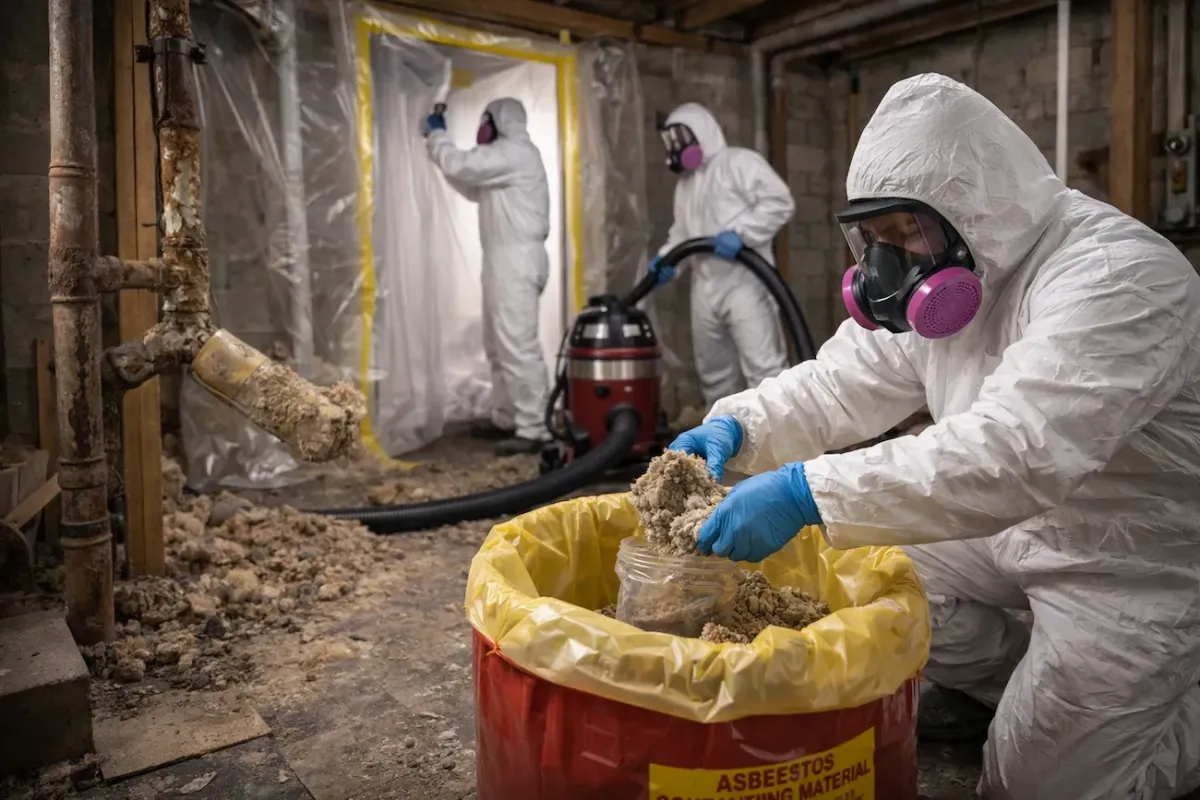
We safely remove asbestos-containing materials from Worcester homes, handling pipe wrap, floor tiles, ceiling texture, and more in full compliance with Massachusetts regulations.
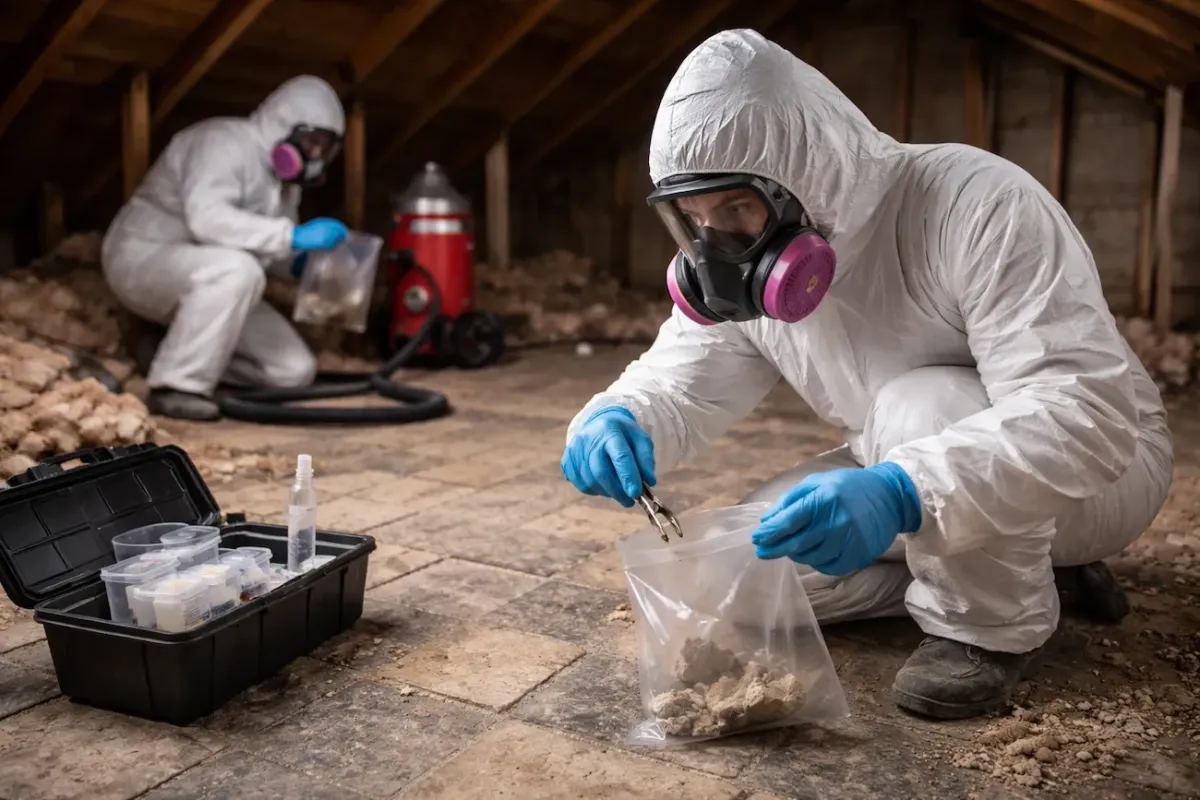
Our licensed inspectors identify and sample suspect asbestos-containing materials in Worcester properties, providing detailed reports before any renovation or abatement work begins.
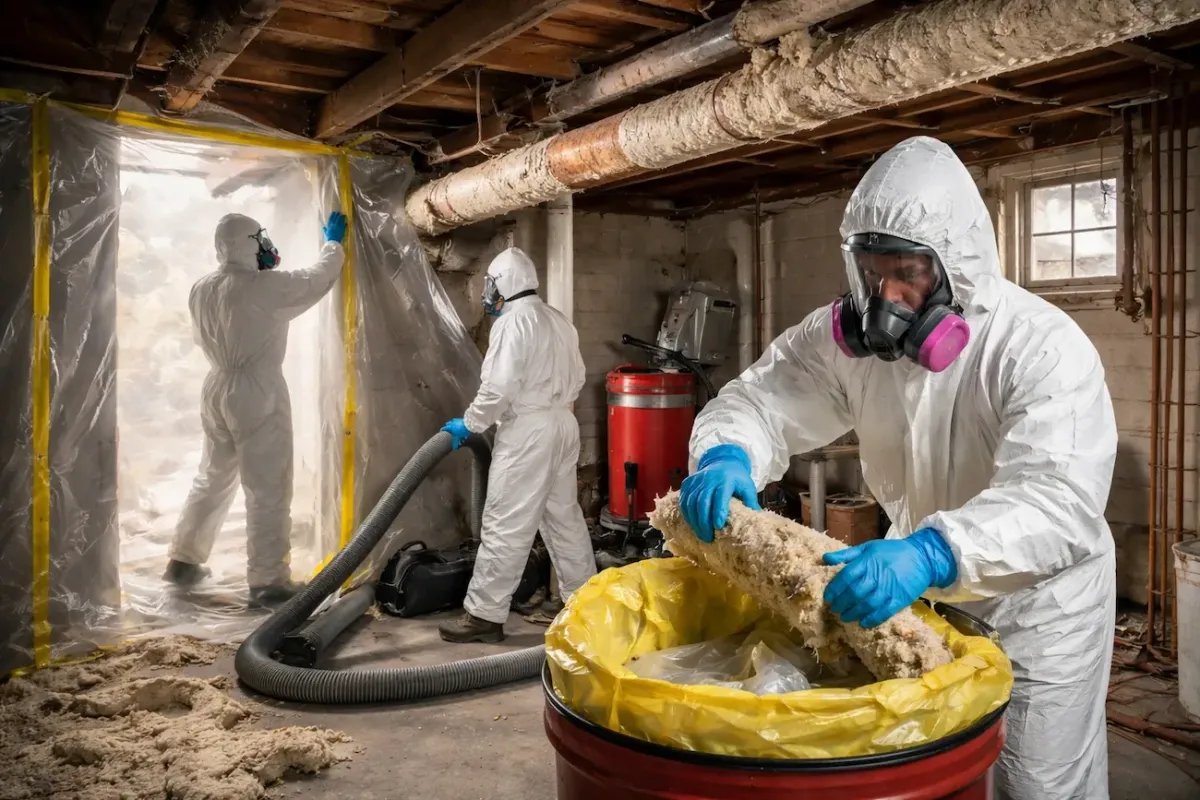
Full-scope asbestos abatement for Worcester residential and commercial properties, including MassDEP 10-day notification filing, containment, removal, and air clearance testing.
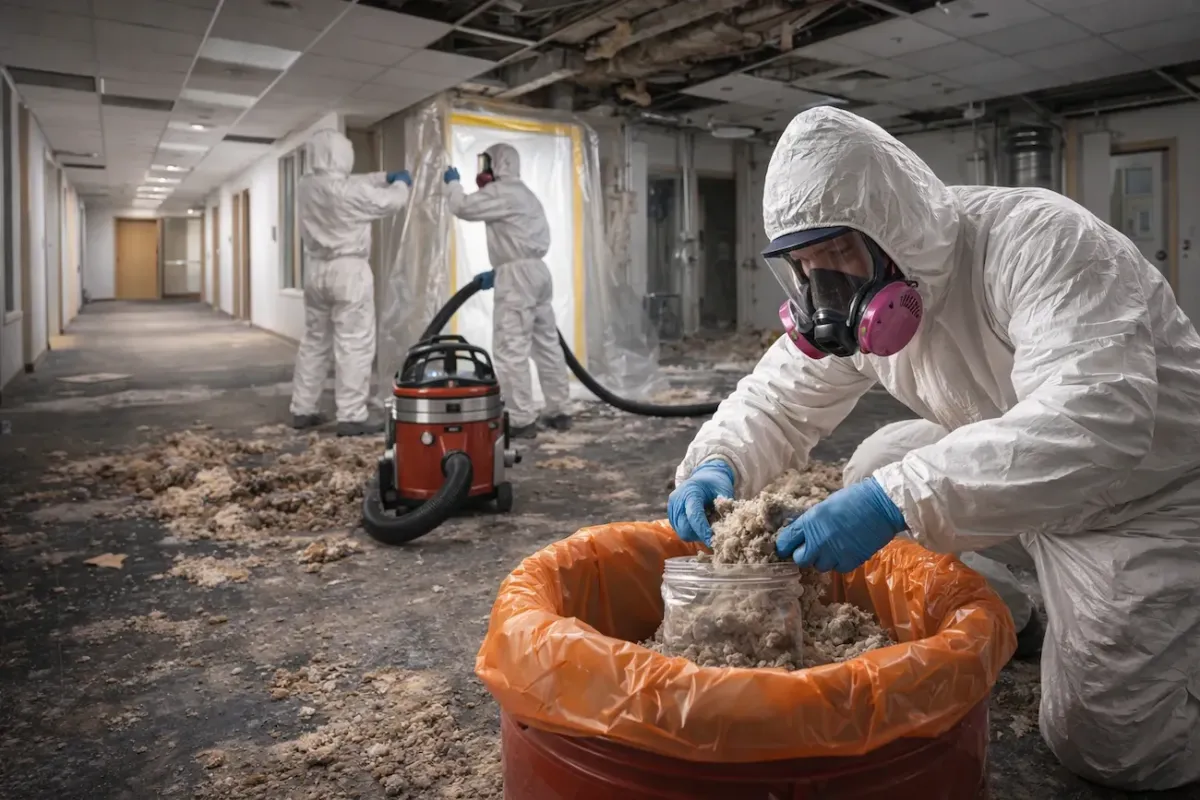
We handle commercial asbestos removal for Worcester office buildings, mill properties, university campuses, and institutional facilities, minimizing downtime and meeting all regulatory requirements.
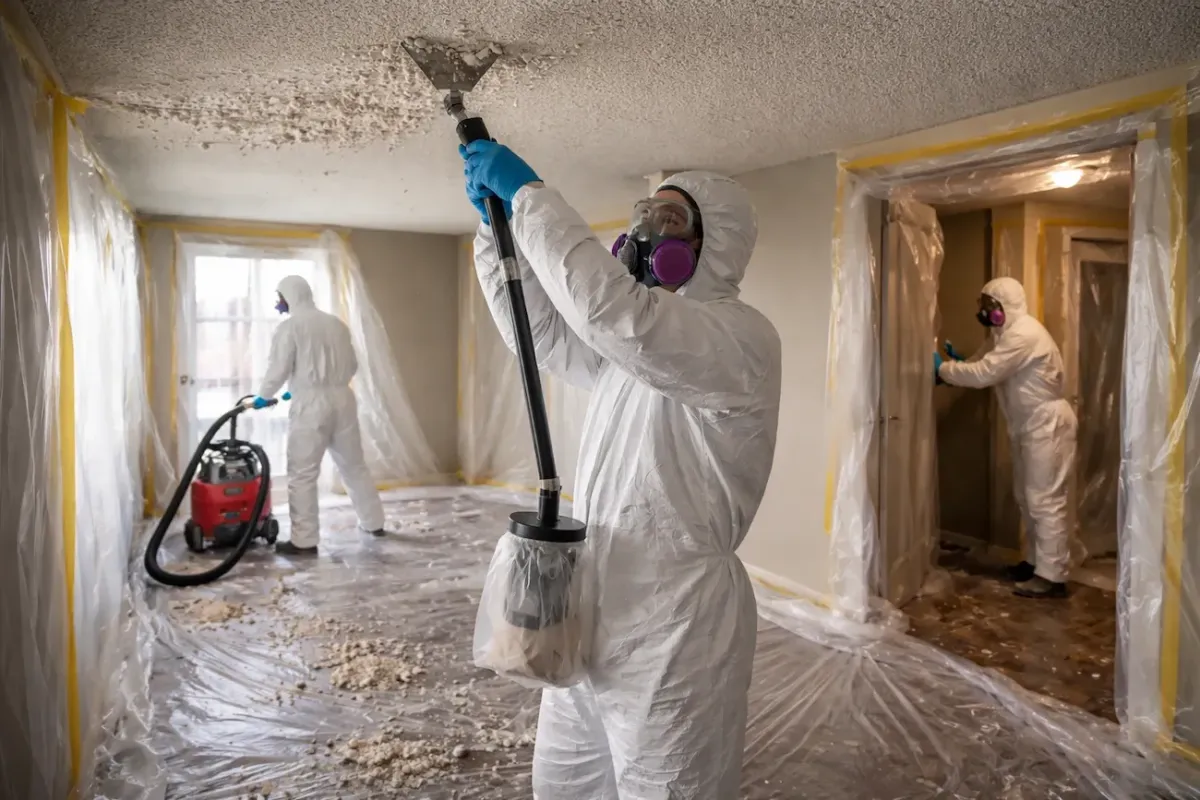
Pre-1980 popcorn ceiling texture throughout Worcester's housing stock frequently contains asbestos—we remove it safely with proper containment and air monitoring on every project.
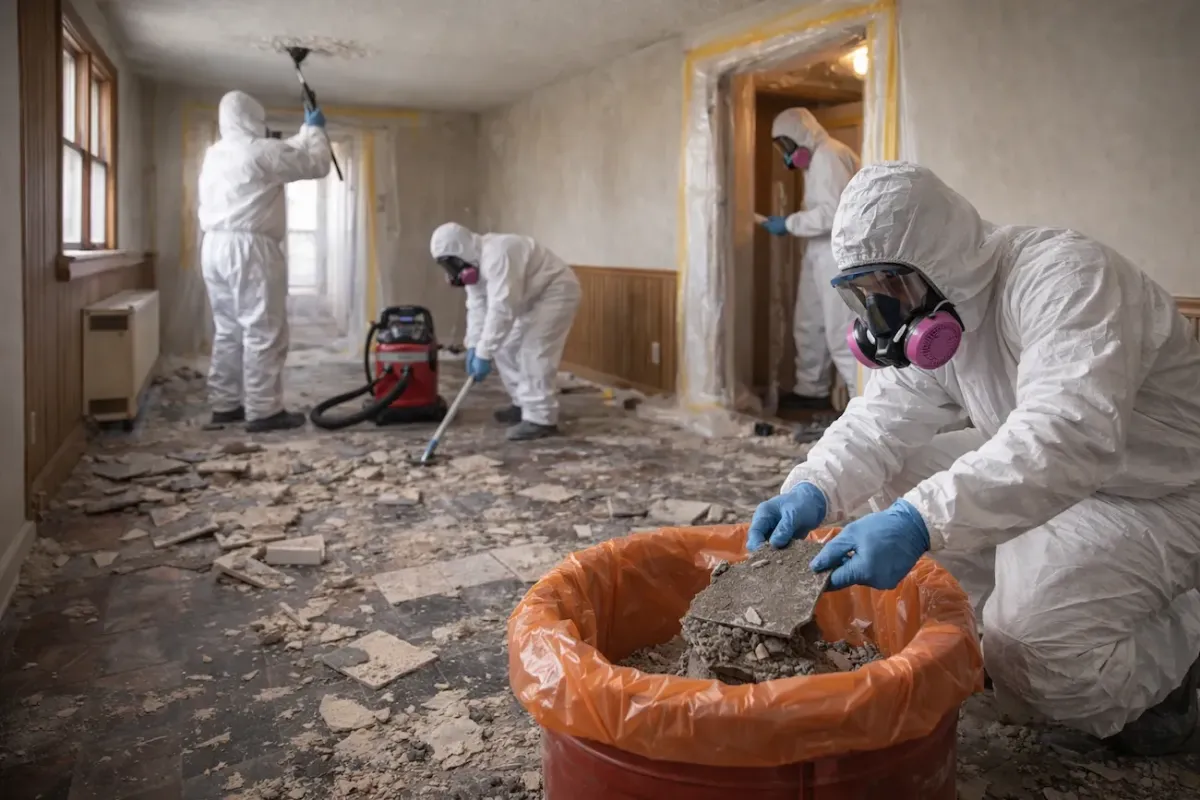
Vinyl asbestos tile is one of the most common ACM types found in Worcester's pre-1980 homes and commercial properties—our team removes it correctly so your renovation can proceed.
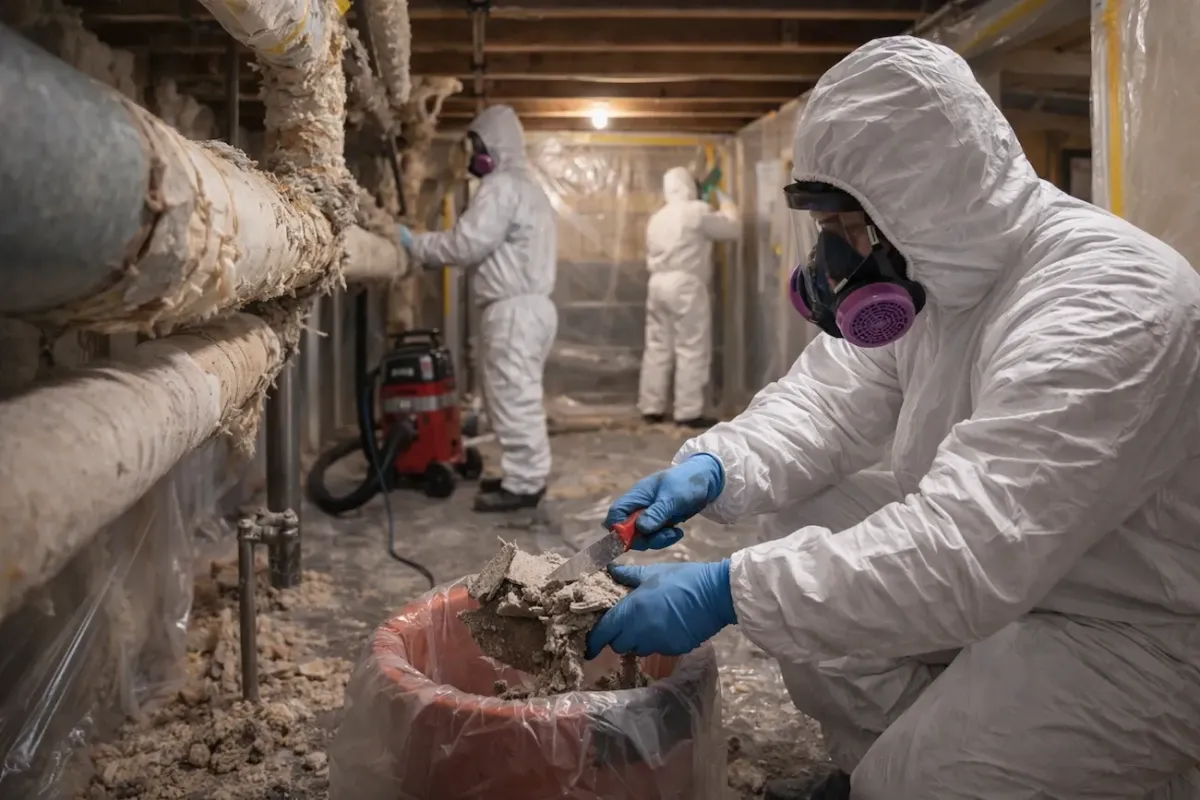
Asbestos pipe wrap on boiler systems and basement heating lines is common throughout Worcester's older housing inventory—we remove and dispose of it safely and completely.
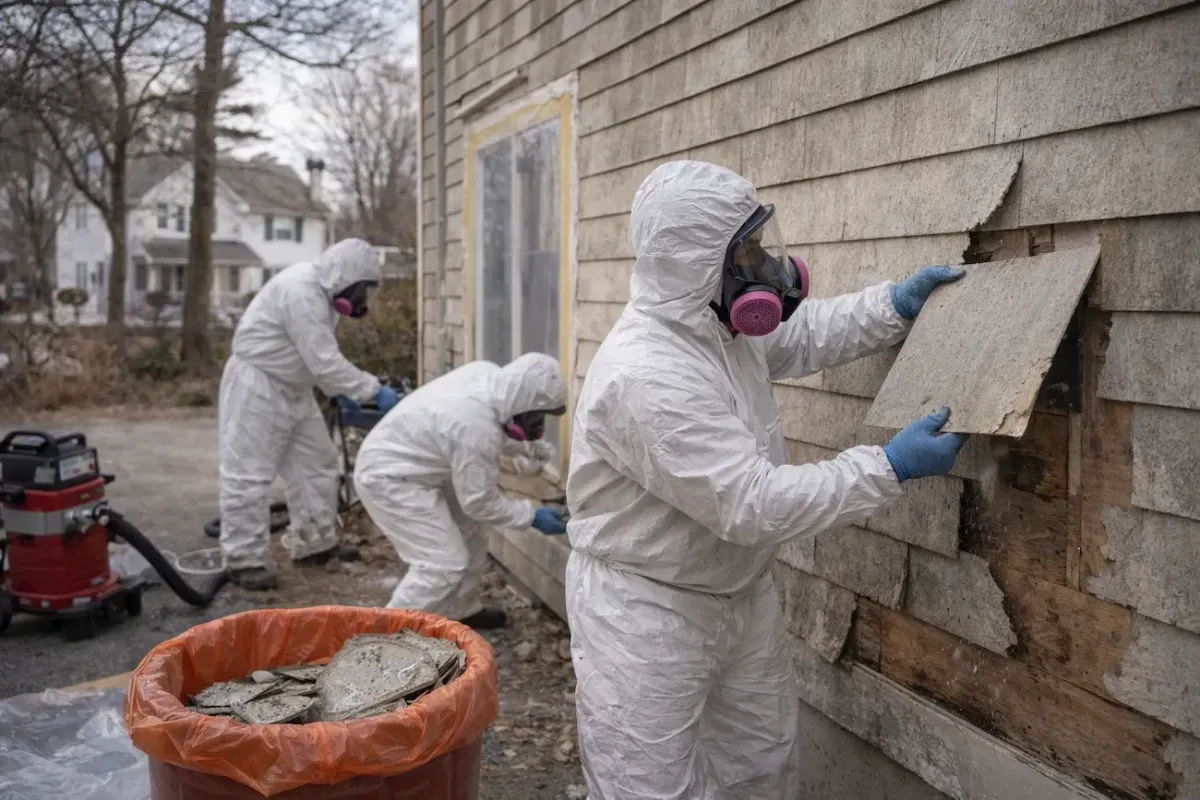
Transite asbestos-cement siding is a documented feature of Worcester triple-deckers and early 20th-century homes—we remove it safely before exterior renovation or repainting.
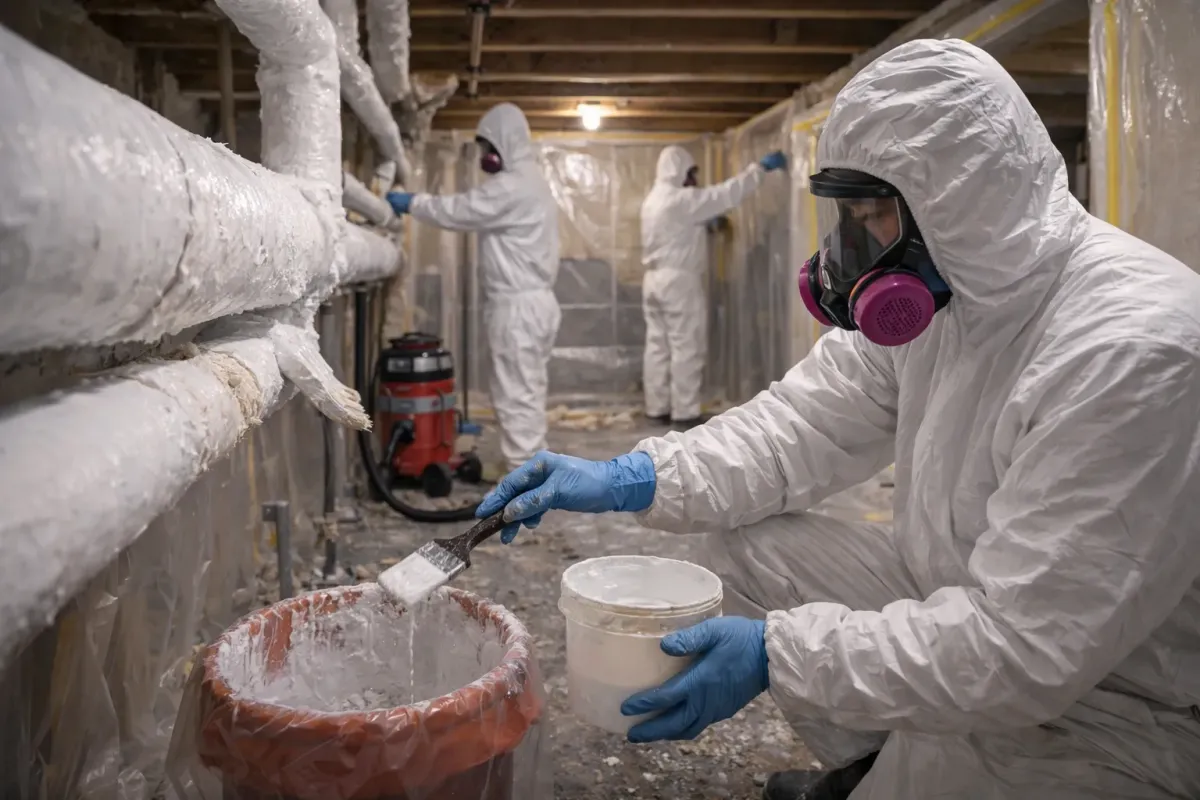
When full removal is not required or cost-effective, encapsulation is an approved Massachusetts option for non-friable asbestos in siding, floor tiles, and other stable ACM.
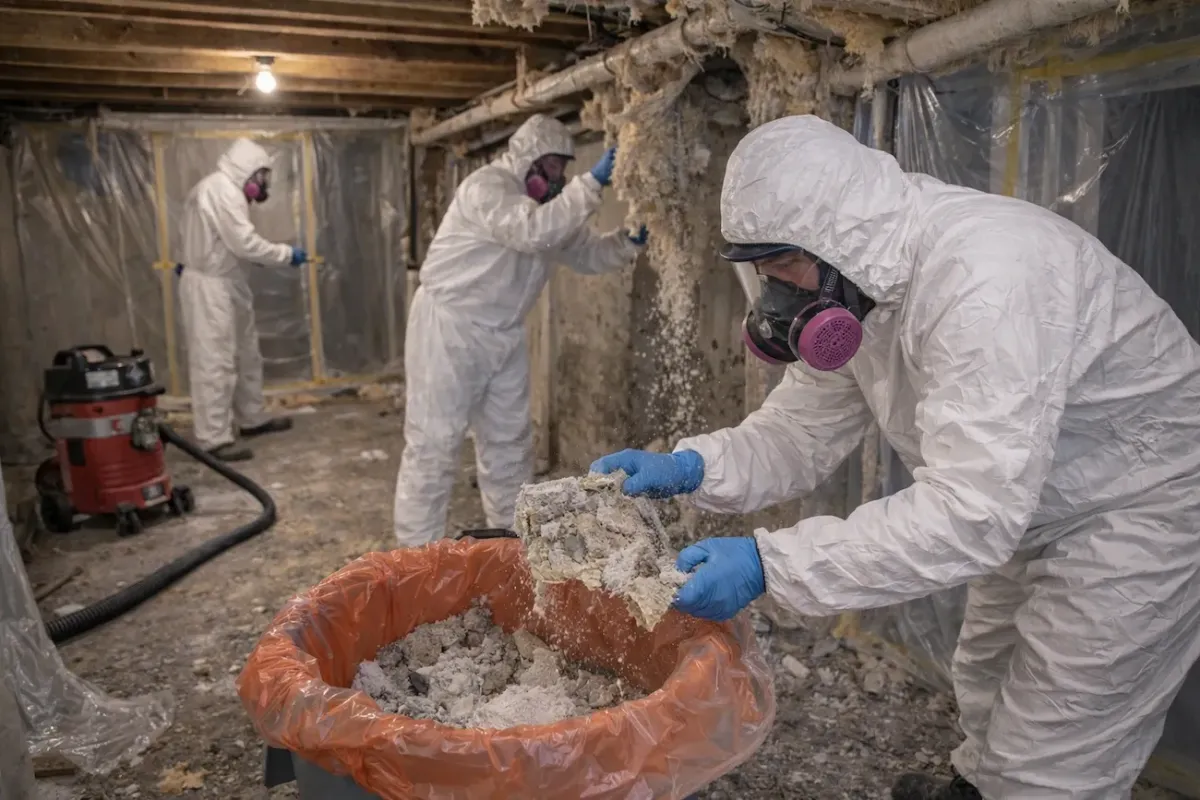
When an unexpected pipe failure, renovation accident, or storm damage disturbs asbestos-containing materials in a Worcester property we respond quickly to contain and remediate safely.
Frequently Asked Questions
Asbestos Removal And Mitigation can be complex, and we’re here to provide answers to common questions. Here are some frequently asked questions from our clients.
Frequently Asked Questions about Asbestos Removal Worcester
Do I need a licensed contractor to remove asbestos in Massachusetts?
Yes. Massachusetts requires all asbestos removal and abatement work above certain thresholds to be performed by contractors licensed under the Department of Labor Standards. Homeowner exemptions that exist in some states do not apply to most regulated asbestos work in Massachusetts. Hiring an unlicensed contractor exposes property owners to significant liability and may create compliance problems that delay renovation permits.
What is the MassDEP 10-day notification requirement?
Any asbestos project that meets Massachusetts notification thresholds—generally projects involving 160 square feet, 260 linear feet, or 35 cubic feet of asbestos-containing material or more—requires written notification to MassDEP at least 10 business days before work begins. We handle this notification for every qualifying project, track the waiting period, and coordinate start dates so your renovation timeline is not affected by compliance delays.
How do I know if my Worcester home contains asbestos?
Visual identification is not reliable. Asbestos was used in dozens of building materials and most cannot be distinguished from non-asbestos alternatives without laboratory testing. The only way to confirm asbestos content is bulk sample collection and analysis by an accredited laboratory. Pre-1980 homes in Worcester should be tested before any renovation that disturbs flooring, ceiling texture, pipe insulation, exterior siding, or roofing materials.
Is asbestos in my home dangerous if I am not renovating?
Asbestos-containing materials in good condition and left undisturbed typically do not pose an immediate health risk. The danger arises when ACM is disturbed, damaged, or deteriorating, which releases airborne fibers that can be inhaled. If you see damaged insulation, crumbling ceiling material, or deteriorating floor tiles in a Worcester property, do not disturb them further. Contact a licensed inspector to assess the condition and advise on next steps.
How long does a typical asbestos removal project take in Worcester?
Project duration depends on scope, material type, and whether MassDEP notification is required. A single-room floor tile or popcorn ceiling project typically takes one to two days for abatement plus air clearance. Full-floor or whole-house projects take longer. When MassDEP notification applies, plan for a 10-business-day waiting period before work can begin. We provide timeline estimates at the assessment stage so you can coordinate with your renovation contractor.
What happens to asbestos waste after removal in Massachusetts?
All asbestos waste in Massachusetts must be packaged in labeled double-bagged containers, manifested with a waste shipping document, transported by a licensed hazardous waste hauler, and disposed of at an approved facility. We handle the full waste management process and provide you with disposal manifests at project close. This documentation may be needed for building permits, property sales, or regulatory compliance files.
Need Asbestos Removal And Mitigation?
What Our Satisfied Clients Have to Say About Worcester Asbestos Pros
We pride ourselves on delivering great results and experiences for each client. Hear directly from home and business owners who’ve trusted us with their Asbestos Removal And Mitigation needs.

They handled the pipe insulation in our basement fast and clean. The MassDEP paperwork was handled for us and we had clearance before our plumber came back in. Exactly what we needed.
Mark Callahan
We own a triple-decker in Main South and needed the floor tile tested before starting a full gut renovation. The inspection was thorough, the report was clear, and the removal crew was professional. Would not use anyone else.
Sandra Ferreira
Our commercial property on Shrewsbury Street had transite siding that needed to come off before repainting. The crew showed up on time, contained the work area properly, and had everything cleaned up in two days.
Thomas Nguyen
The Trusted Asbestos Removal And Mitigation Expert Near You
Ready to hear more about expert services at Worcester Asbestos Pros?
Contact us today to receive a detailed, no-obligation quote.
Monday – Friday: 7:00 AM – 5:00 PM Saturday: 8:00 AM – 2:00 PM Sunday: Closed